Brief anatomy
Give every editor a brief they can act on
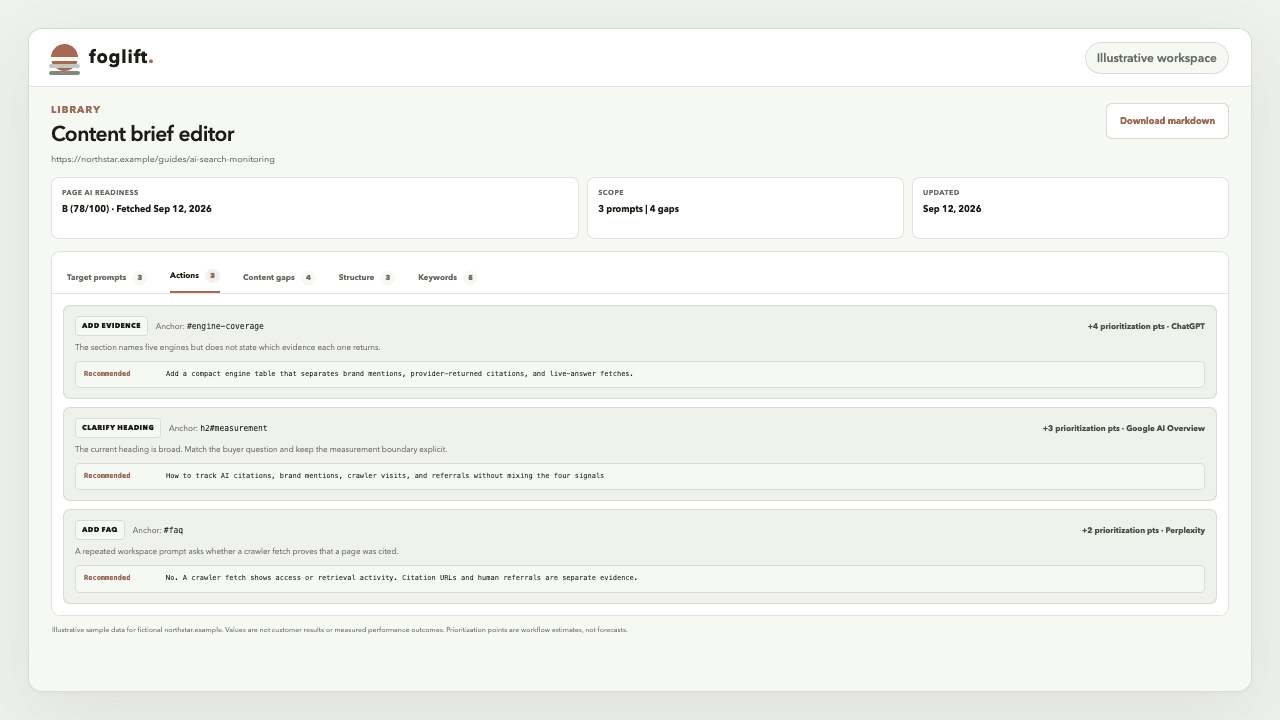
Separate the question to answer, the edit to make, the diagnosed gap, and the context an editor can use. Six focused outputs keep research, structure, and implementation from collapsing into a vague writing prompt.
- Target prompts
- A topic brief starts with the exact requested question. A page brief uses workspace prompts when available, with high, medium, or low priority and the reason for each selection.
- Anchored actions
- Each action names an edit type, page anchor, current text, recommended text, rationale, target engine, and an estimated prioritization value.
- Content gaps
- Failed findings from Page AI Readiness dimensions below half of their available score become up to 10 high-, medium-, or low-impact gaps.
- Structure recommendations
- FAQ, entity, depth, citation-formatting, and heading findings can become section or schema tasks. A Key Takeaways block is included as a reusable summary pattern.
- Repeated phrases
- The keyword tab contains up to 15 repeated two-word phrases from the fetched page. These are page-language observations, not search-volume estimates.
- Workspace context
- Eligible Brand Kit guidance can be summarized into the brief. The output records whether knowledge context was applied and keeps it separate from observed answer evidence.